
If you want your business to be discovered online, you now have to think beyond traditional Google search results. Today, people find answers through search engines, AI chatbots, and instant answer boxes—each powered by different types of “engines.”
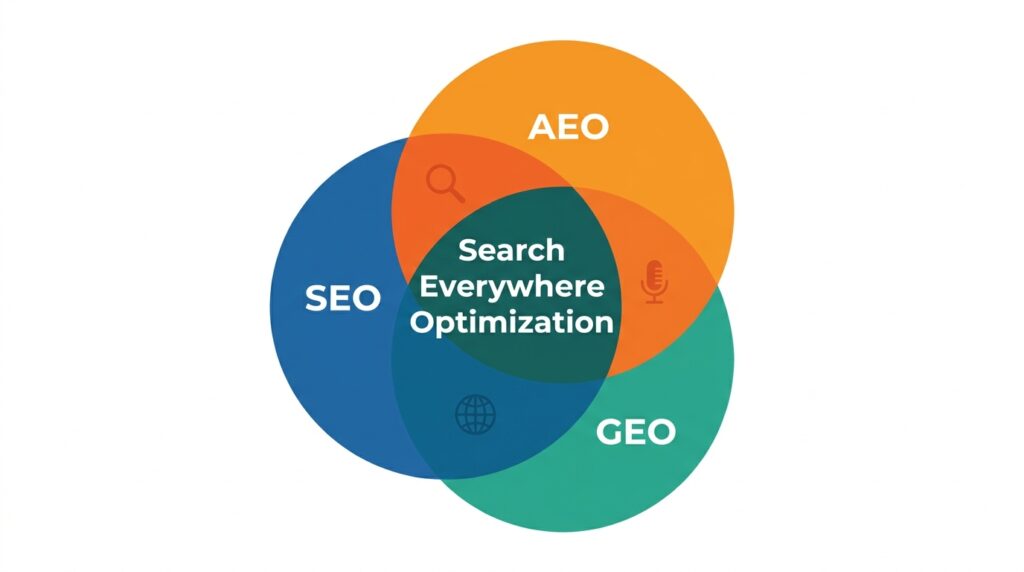
That’s where three key strategies come in: SEO (Search Engine Optimization), AEO (Answer Engine Optimization), and GEO (Generative Engine Optimization). Together, they help you show up everywhere your ideal customers are searching.

SEO: Search Engine Optimization Explained
SEO stands for Search Engine Optimization, and it’s the process of improving your website so it ranks higher on search engines like Google and Bing. When someone types a keyword such as “best web designer in Lagos,” SEO helps your pages appear near the top of the results.
Traditional SEO focuses on things like using the right keywords, writing valuable content, improving page speed, and earning quality backlinks so search engines see your site as trustworthy and relevant.
How SEO Works In Simple Terms
Think of Google as a huge library and your website as a book. SEO is how you design the cover, write the description, and organise your chapters so the librarian (Google) can quickly find and recommend your book to the right readers.
You do this by:
- Using target keywords in your titles, headings, and body text (for example, “SEO for small businesses,” “SEO, AEO and GEO,” “Nigeria digital marketing”).
- Organising your content with clear headings (H2, H3), short paragraphs, and bullet points so both humans and search bots can scan easily.
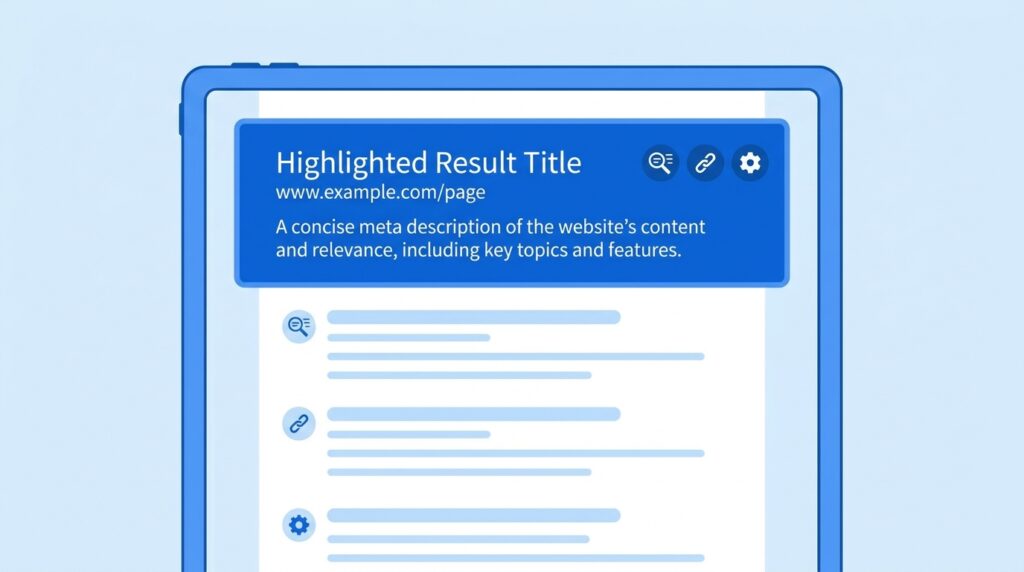
- Optimising technical elements like meta titles, meta descriptions, image alt text, and internal links to help Google understand your pages.

AEO: Answer Engine Optimization Explained
AEO stands for Answer Engine Optimization. Instead of focusing only on traditional search results, AEO is about making your content show up in answer boxes, featured snippets, FAQ sections, and AI-powered answers.
Answer engines power things like Google’s AI-generated overviews, zero-click answers, and chatbot-style responses that give users direct answers without them needing to click through multiple pages.
How AEO Works In Simple Terms
AEO is about structuring your content so machines can quickly understand your answers and display them in a clean, direct format. You do this by:
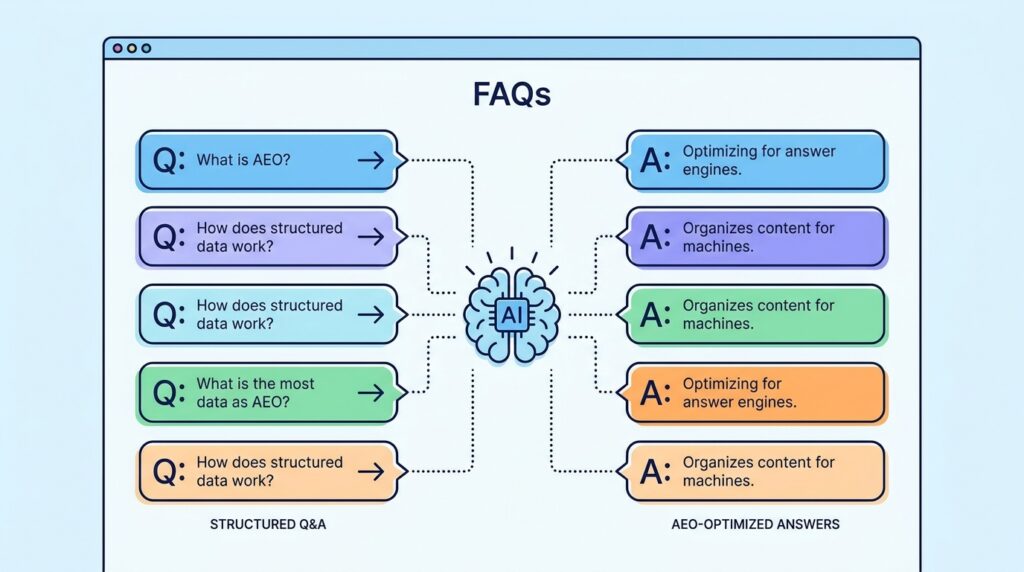
- Writing clear questions and answers inside your content (for example: “What is SEO?” followed by a one-paragraph answer).
- Creating FAQ sections that directly respond to common user queries in simple language.jasper+1
- Using schema markup (structured data) where possible, such as FAQ schema, to help search engines recognise your Q&A format.
If you’ve ever seen a box at the top of Google with a short answer to your question, that’s the kind of placement AEO aims to win.
GEO: Generative Engine Optimization Explained
GEO stands for Generative Engine Optimization. Generative engines are tools like ChatGPT, Perplexity, Gemini, and other AI systems that read content from across the web and generate new answers.
Instead of just listing links, generative engines create summaries, recommendations, and step-by-step guides using information from multiple sources—and GEO helps your brand be one of the sources they trust and cite.
How GEO Works In Simple Terms
Generative engines look for content that is clear, well-structured, and authoritative. GEO focuses on:
- Writing content that goes deep on topics, with examples, explanations, and data, so AI tools see your site as a strong source.
- Using consistent terminology and entity-focused language (mentioning your brand name, location, niche, and services clearly) so AI can link those entities to your site.
- Building topical authority with multiple related articles, not just one blog post, so generative engines treat you as an expert in that niche.
When someone asks an AI chatbot “What is SEO, AEO and GEO?” GEO helps ensure your content is among the pages the AI reads, cites, and recommends.
Why SEO, AEO, And GEO Matter Together
In the past, SEO alone was enough to get meaningful visibility online. Today, users find information through search engines, answer boxes, voice assistants, and AI chat tools—so your content has to be discoverable across all these channels.
Combining SEO, AEO, and GEO creates a “Search Everywhere Optimization” strategy: you’re not only targeting search rankings but also AI answers, featured snippets, and generative responses.
For a business owner or creator, this means:
- SEO brings in organic traffic from traditional search results.
- AEO wins instant answers and featured placements for key questions.
- GEO positions your brand in AI-generated content and recommendations.
Practical Keyword Optimisation Tips (SEO, AEO, GEO)
To optimise your blog post for all three—SEO, AEO, and GEO—you need a simple keyword and structure strategy.
Step 1: Choose Your Core Keywords
Pick a main keyword and 3–5 supporting keywords, such as:
- Main keyword: “SEO AEO GEO explained”
- Supporting keywords: “what is SEO,” “what is AEO,” “what is GEO,” “Search Everywhere Optimization,” “optimize for AI search engines”
Use the main keyword in:
- The page title and H1 (e.g., “SEO, AEO, and GEO Explained: Simple Guide For Beginners”).
- The meta title and meta description.
- The introduction and conclusion, naturally within sentences.
Use the supporting keywords in:
- H2 and H3 headings (e.g., “What Is SEO?”, “What Is AEO?”, “What Is GEO?”).
- FAQ section questions and answers.
- Anchor text for internal links to related posts.
Step 2: Structure Content For Answers
Make your blog easy for answer engines and generative tools to read.
- Use question-based headings like “What is SEO?” “Why is GEO important?”
- Include short, direct definition paragraphs immediately under each question.
- Add an FAQ section at the end targeting long-tail queries (for example: “Is AEO better than SEO?” “How do I optimise for GEO?”).
Step 3: Support With Helpful Internal Links
Link to your other relevant pages using descriptive anchor text. For example, you might link to:
- Your “SEO services for small businesses” page.
- A case study showing results from your optimisation work.
- A guide on “how to write AI-friendly blog posts.”
This builds authority for both SEO and GEO because search engines and generative engines can see your broader expertise.
Simple FAQ Section For AEO
Here’s a sample FAQ block you can add and customise for your site:
What is SEO?
SEO (Search Engine Optimization) is the process of improving your website so it ranks higher on search engines like Google and Bing using keywords, content quality, and technical best practices.
What is AEO?
AEO (Answer Engine Optimization) is about structuring your content into clear questions and answers so it appears in featured snippets, FAQ sections, and AI-driven responses.
What is GEO?
GEO (Generative Engine Optimization) focuses on making your content easy for AI tools and generative engines to understand, cite, and reference in their answers.
Do I need SEO, AEO, and GEO together?
Yes—using all three helps your brand show up in traditional search results, instant answer boxes, and AI-generated content, giving you maximum visibility wherever people search.
Clear Call To Action (CTA)
If you’re ready to optimise your brand for the future of search—SEO, AEO, and GEO—I can help you audit, redesign, and optimise your content so it’s discoverable across Google, AI chatbots, and answer engines.
Click here to book a free 20‑minute “Search Everywhere Optimization” consultation, and let’s map out how to turn your website into a powerful traffic and lead-generation machine.